Disundi
Born in 1993 in Kinshasa, Democratic Republic of Congo
Resides and works between Kinshasa, DRC and Brussels, Belgium
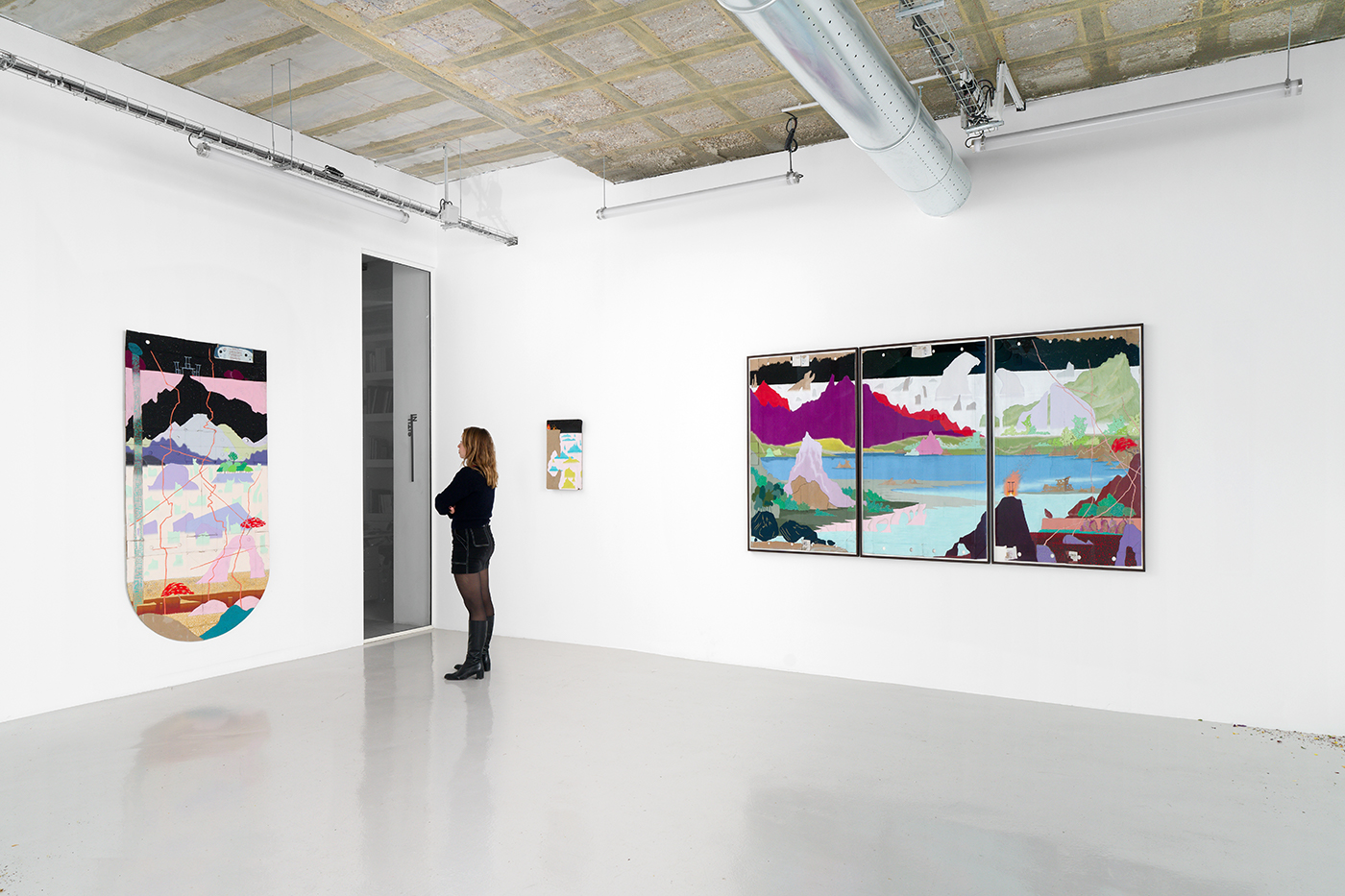
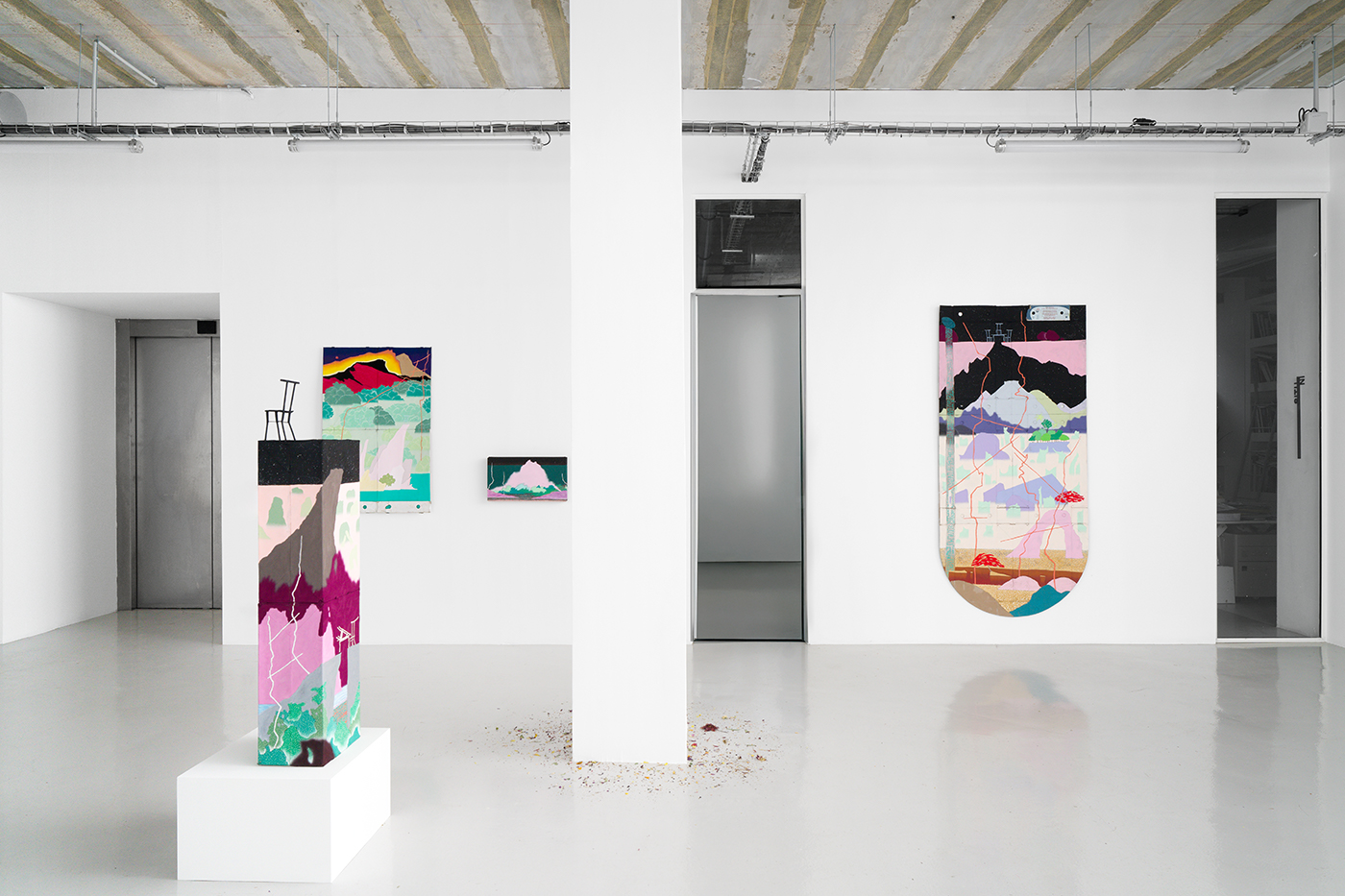
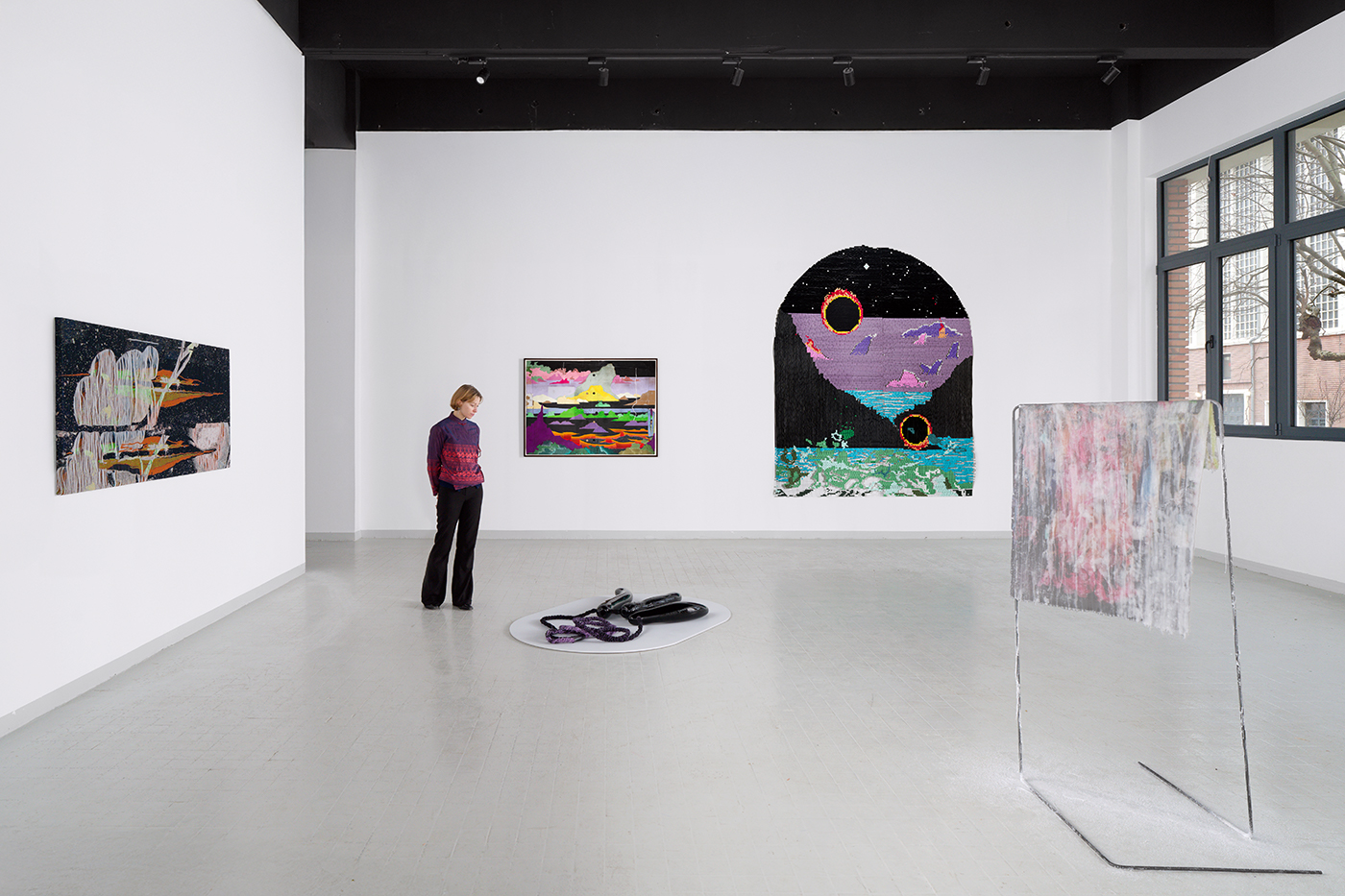
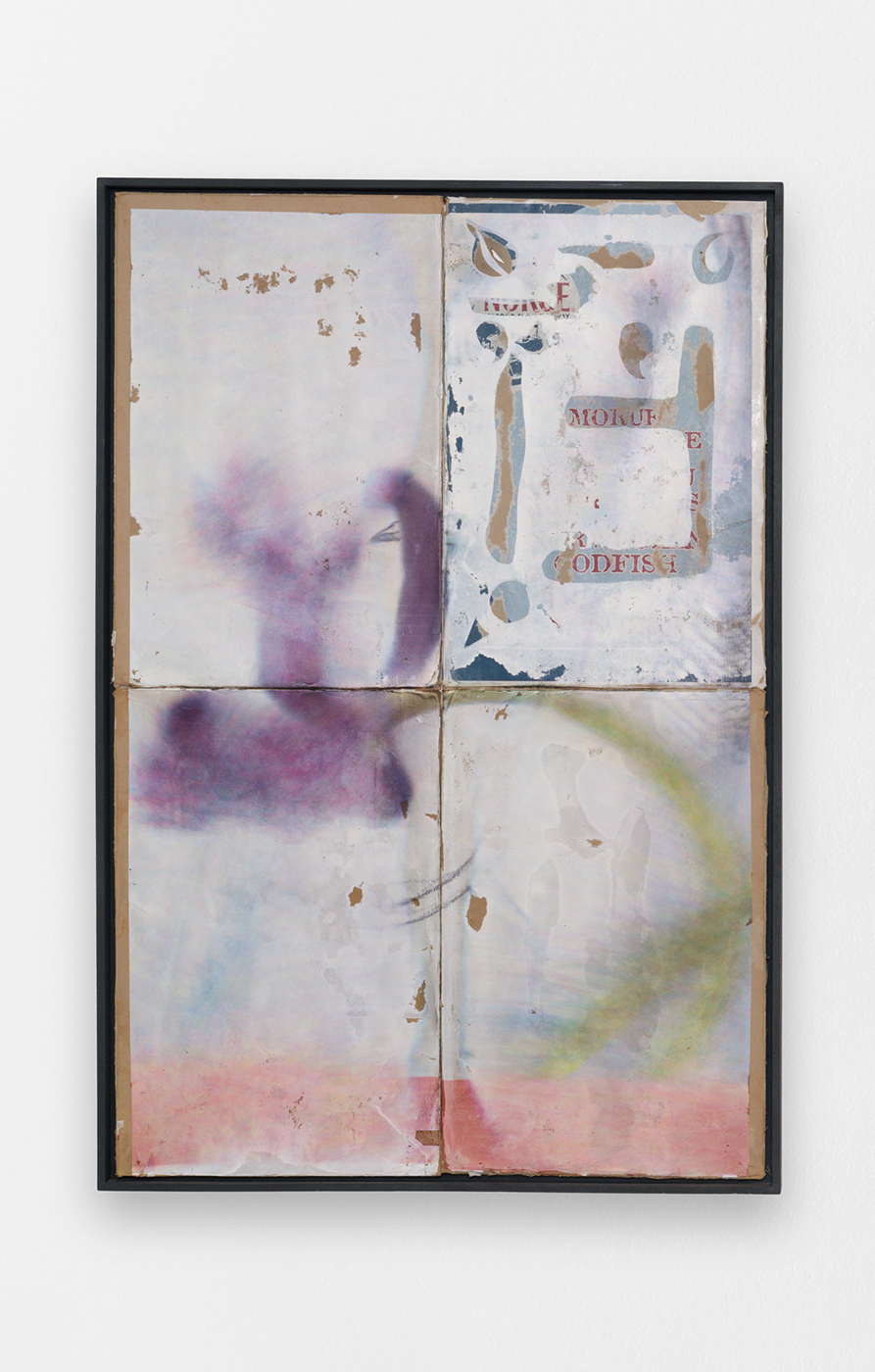
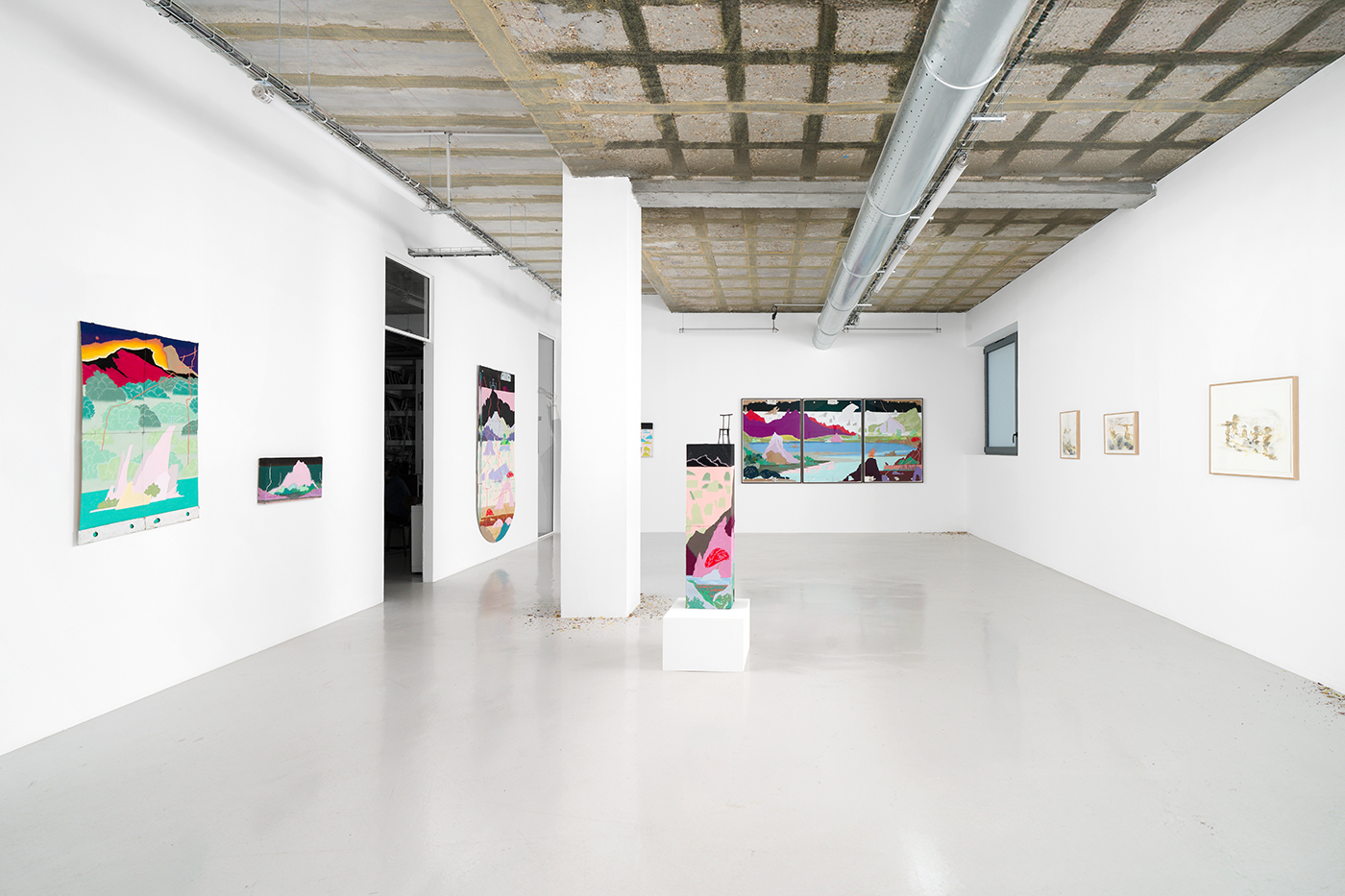
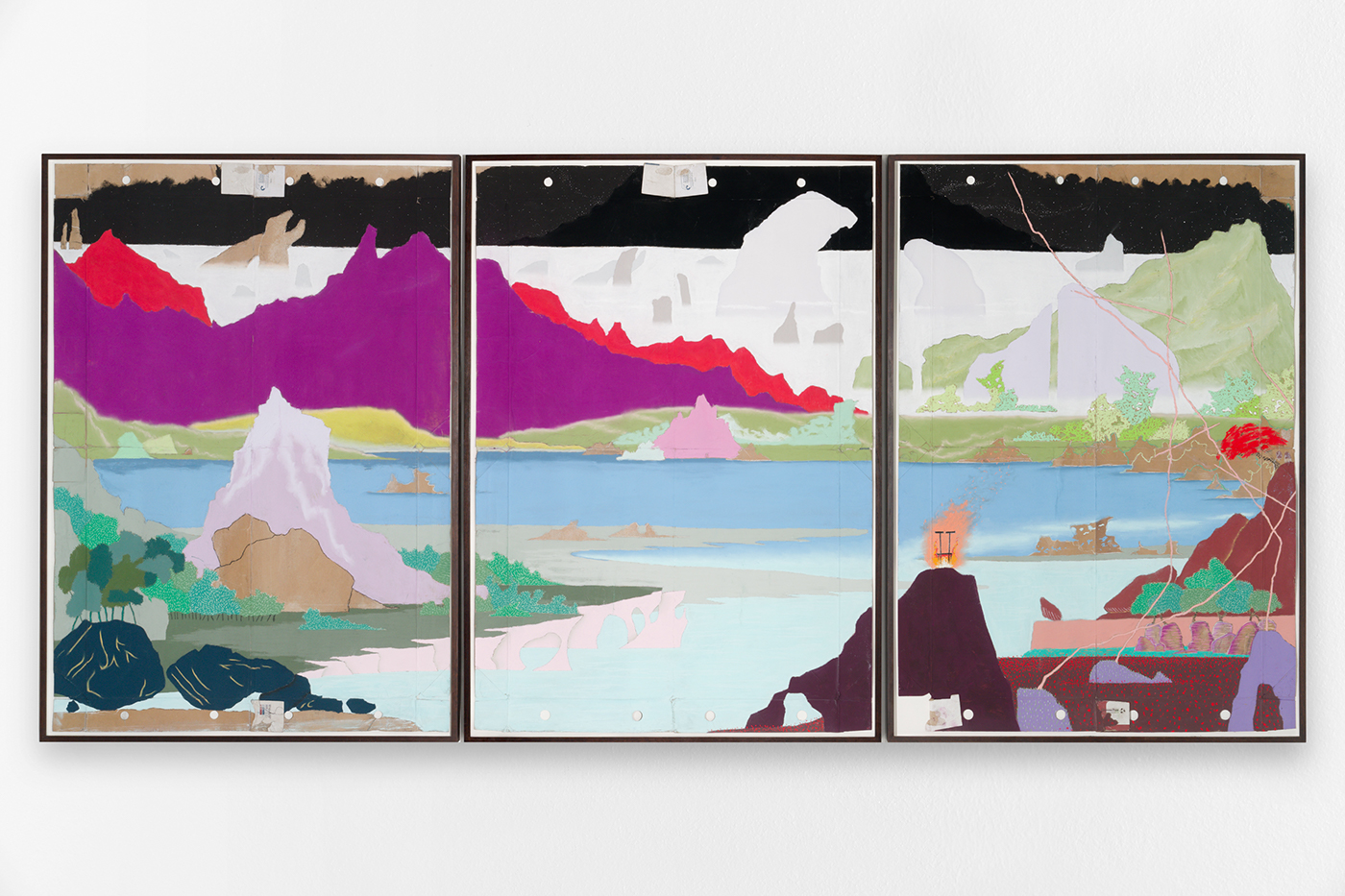
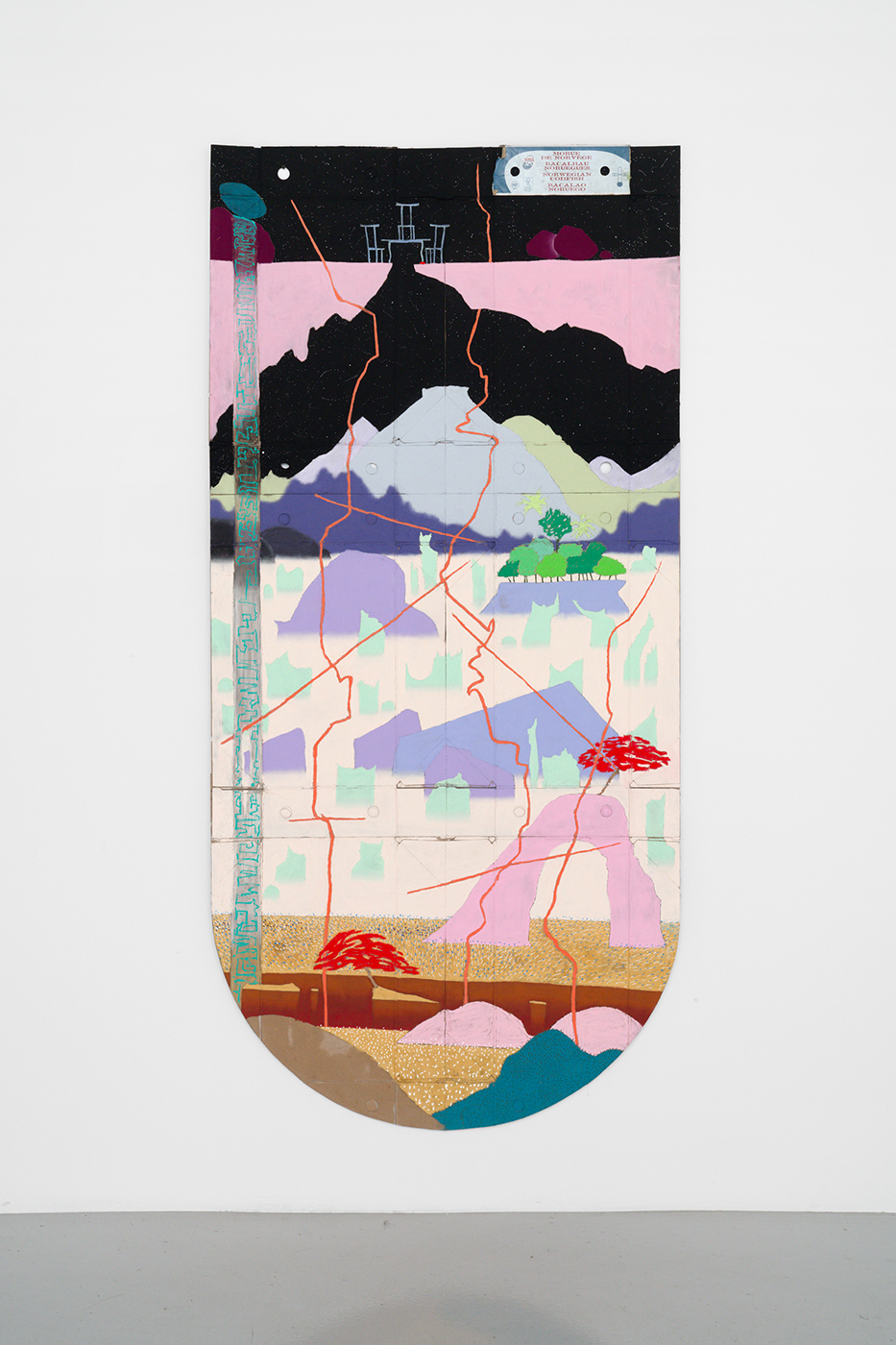
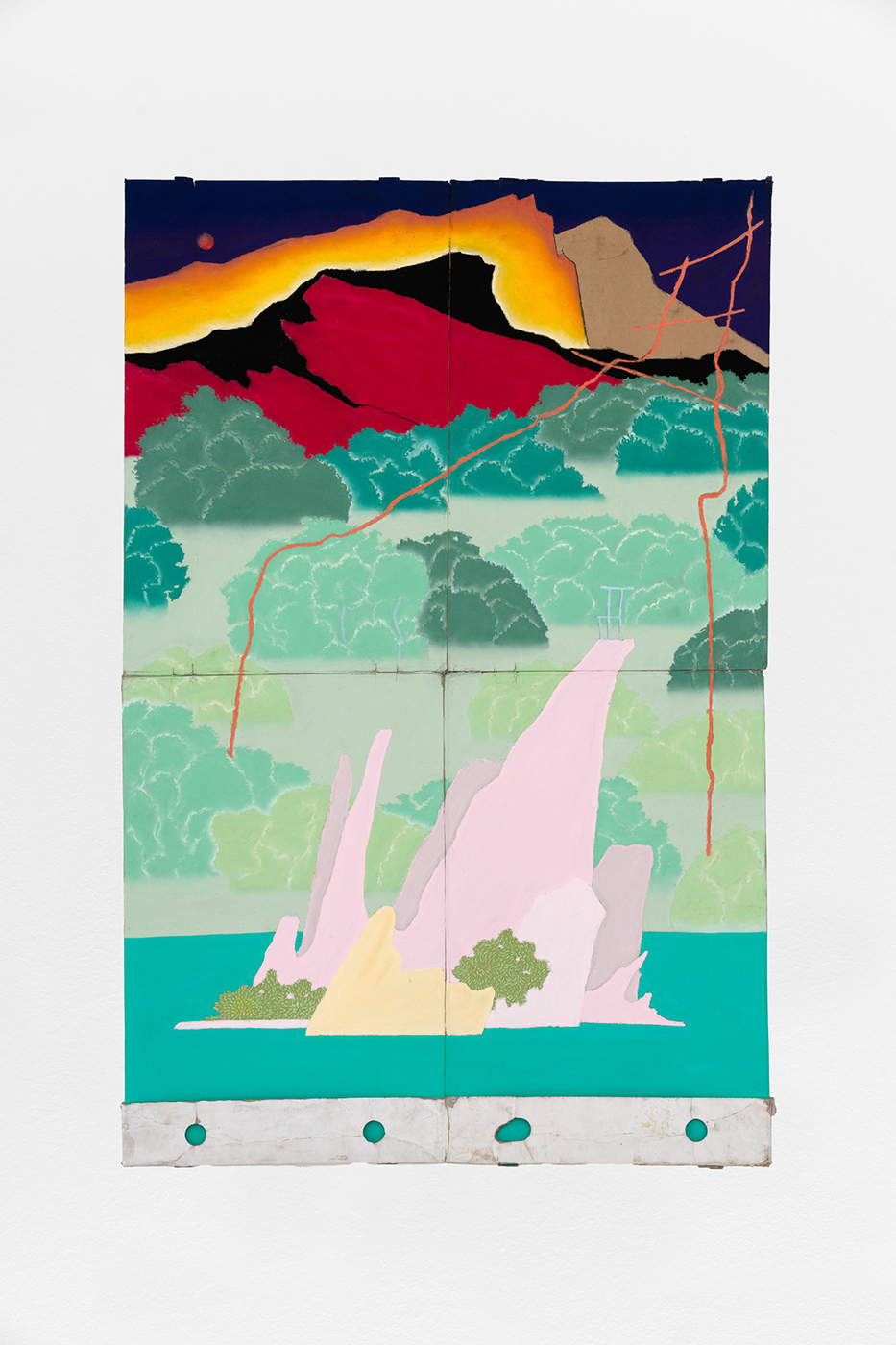
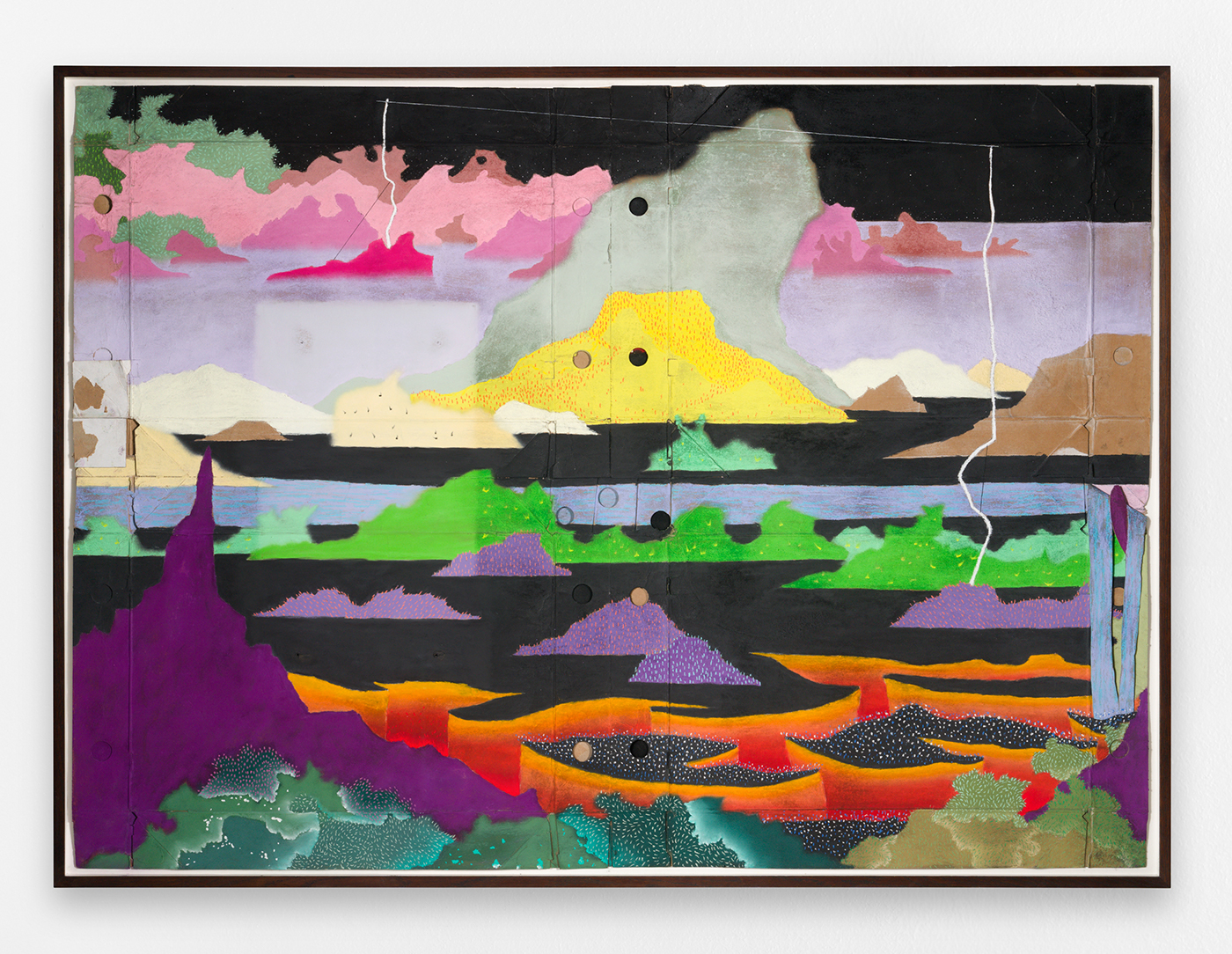
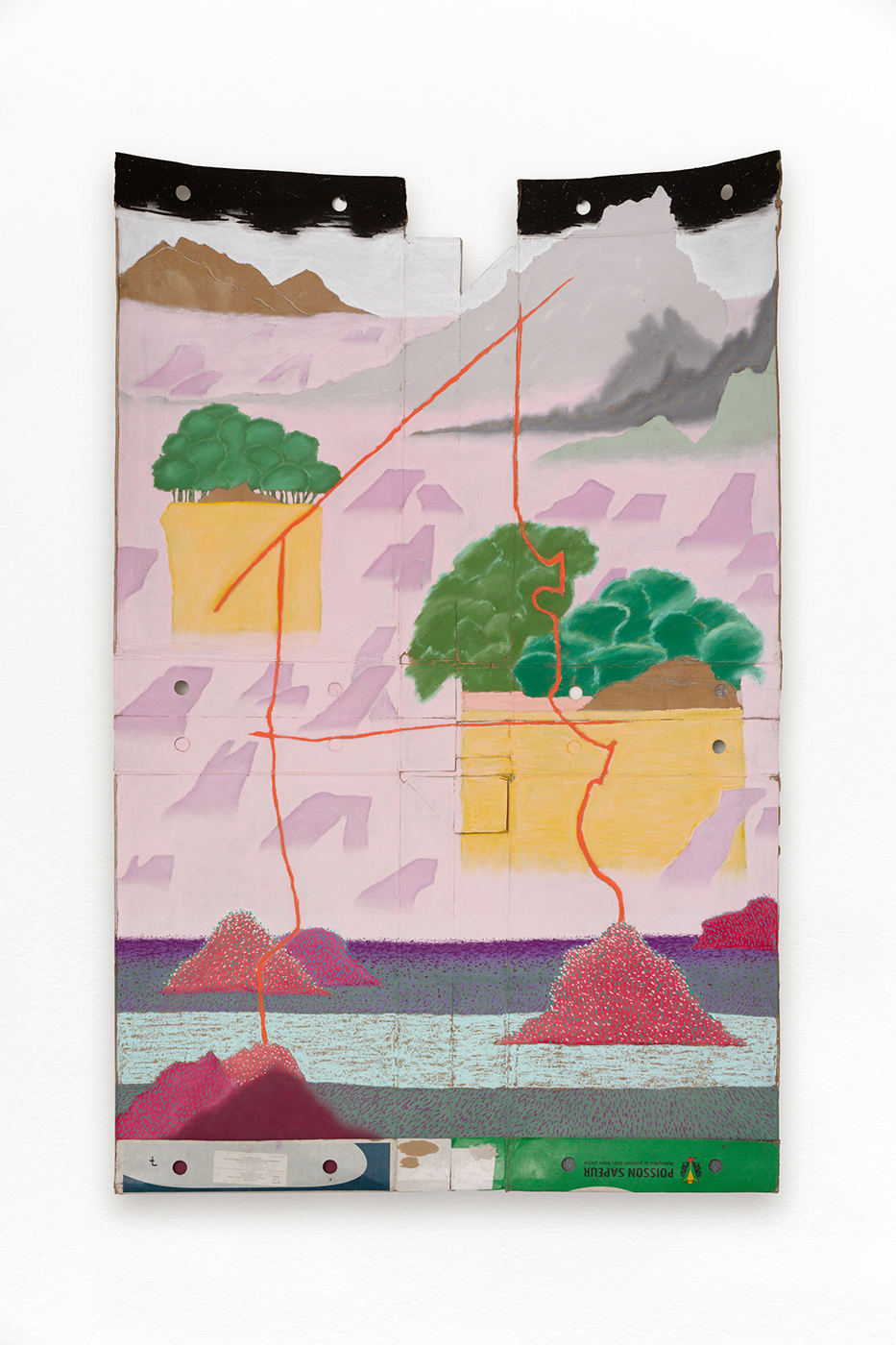
In his work, Beau Disundi weaves together threads of history. Reflecting on the journey of codfish from the cold waters of the North Atlantic Ocean, all the way to contemporary Congolese kitchens, he retraces a history of maritime trade and its culmination in the era of globalized capitalism. The work maps out a circulation of power and capital through material traces of domination that have become mundane, everyday objects. At an extremity of the painting « Geopoetic » (2025), we read: «Norwegian codfish.» The artist leaves clues that point at the recycled makayabu packagins he used as canvas — makayabu being the lingala word for dried and salted fish. Growing up in Kinshasa, Disundi is well acquainted with the fish's salty flavour and its many uses in local dishes. Departing from his own plate, he unpacks a wider story in which saltfish trade plays a
major role in capitalist expansion and incorporation.
«The commerce of saltfish is, from its beginnings, a transatlantic affair». Originating in Viking culture, the practice of preserving codfish by drying and salting it facilitated longdistance travel. The technique was then adapted by the Basques, before Portugal took the lead in the business of salted codfish production in the late 14th century, feeding into its expanding colonial expeditions. Disundi sends us back to that time, when this dried travel food was introduced by Portuguese explorers in the region surrounding the Congo river. «If we are what we eat – he asks – what does the story of makayabu say of me? » How does one relate to identity when it is so profoundly tangled up with imposed cultural codes?
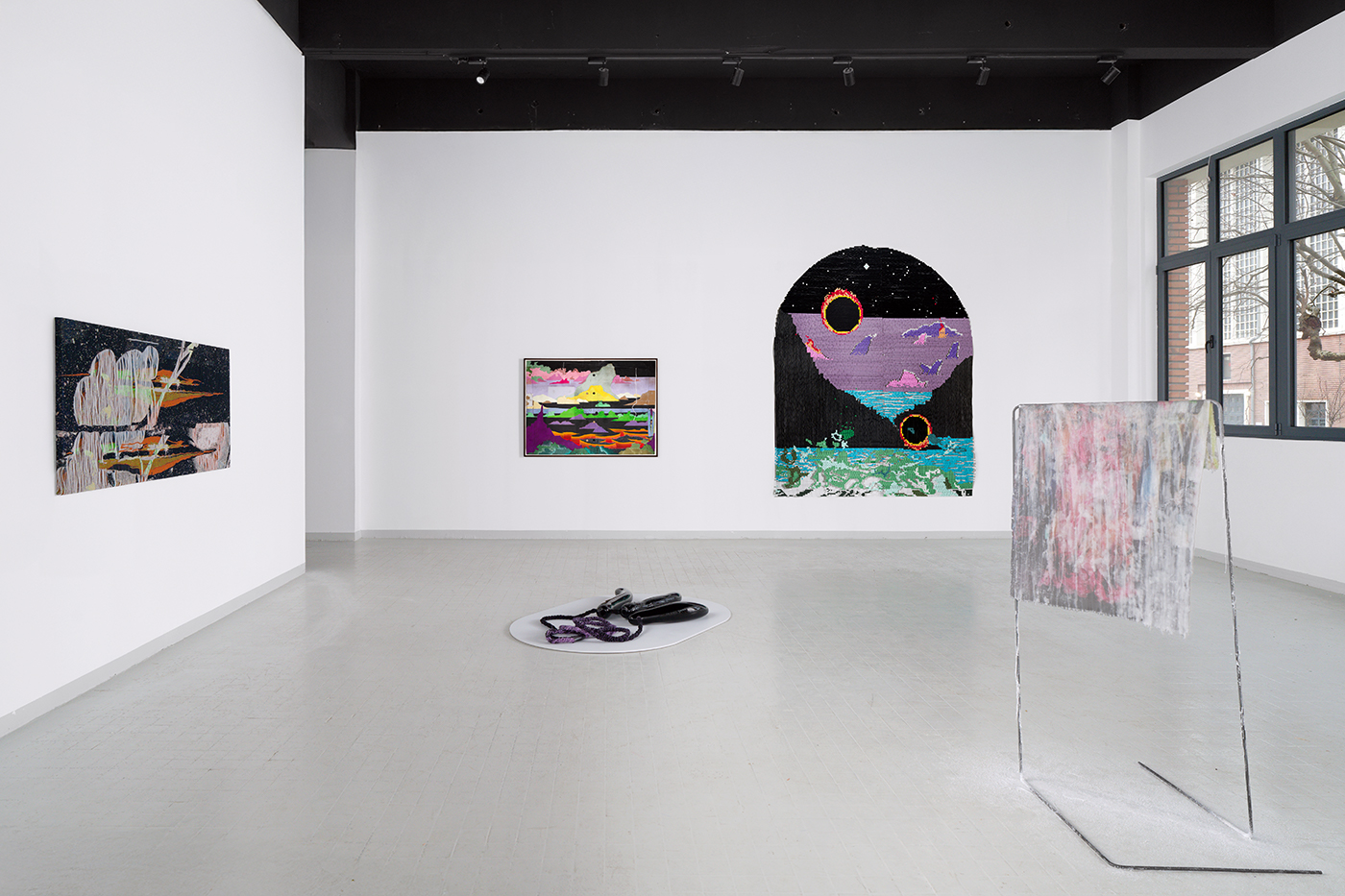
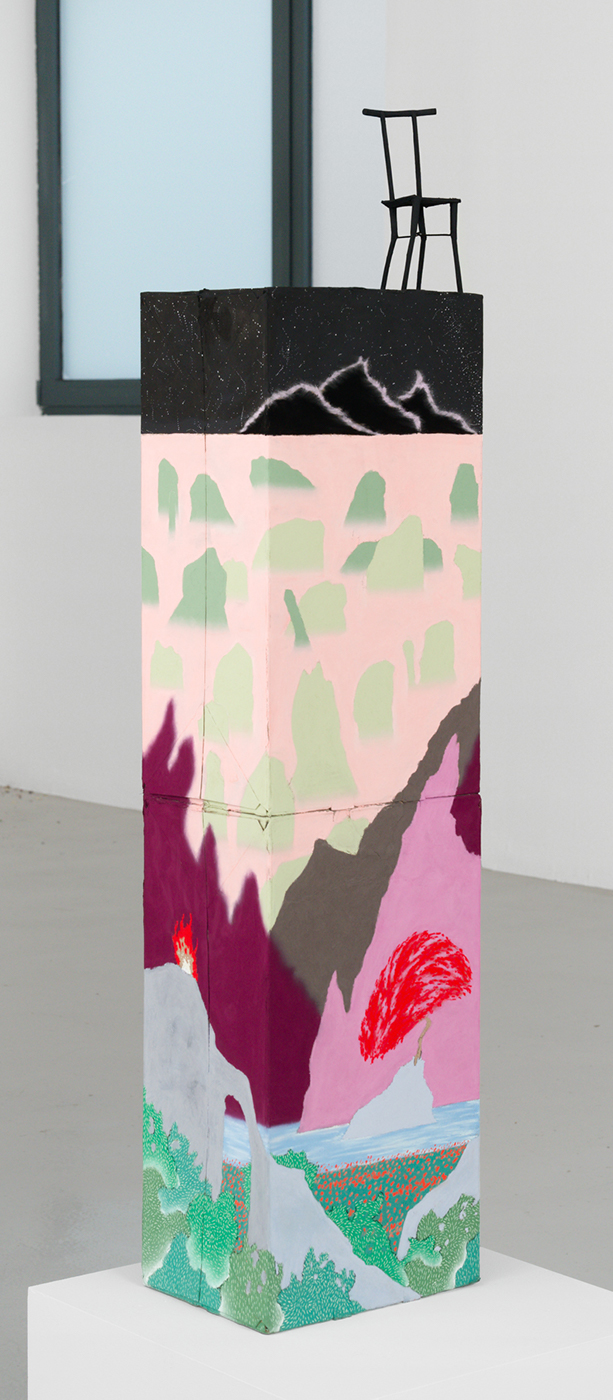
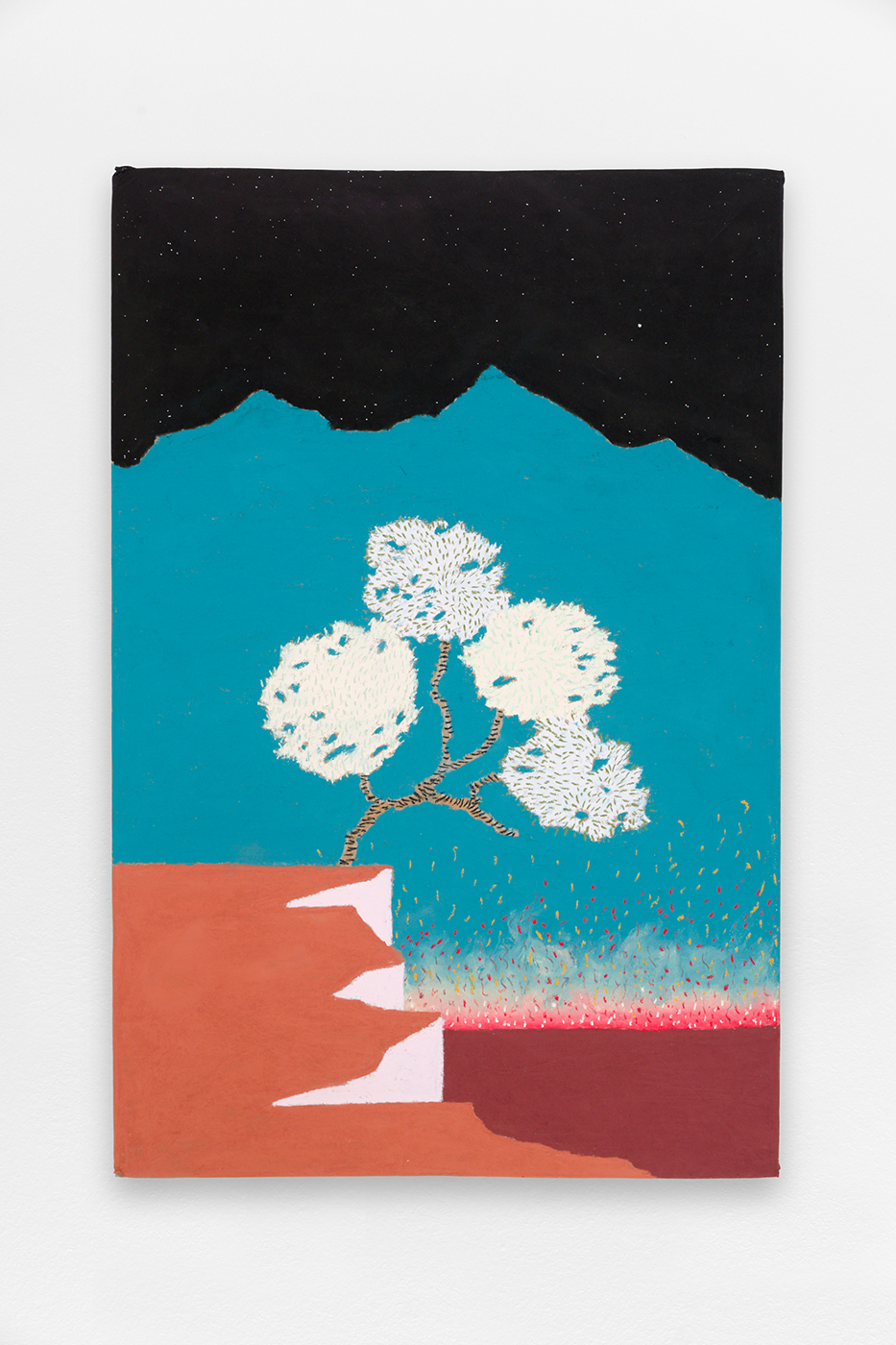
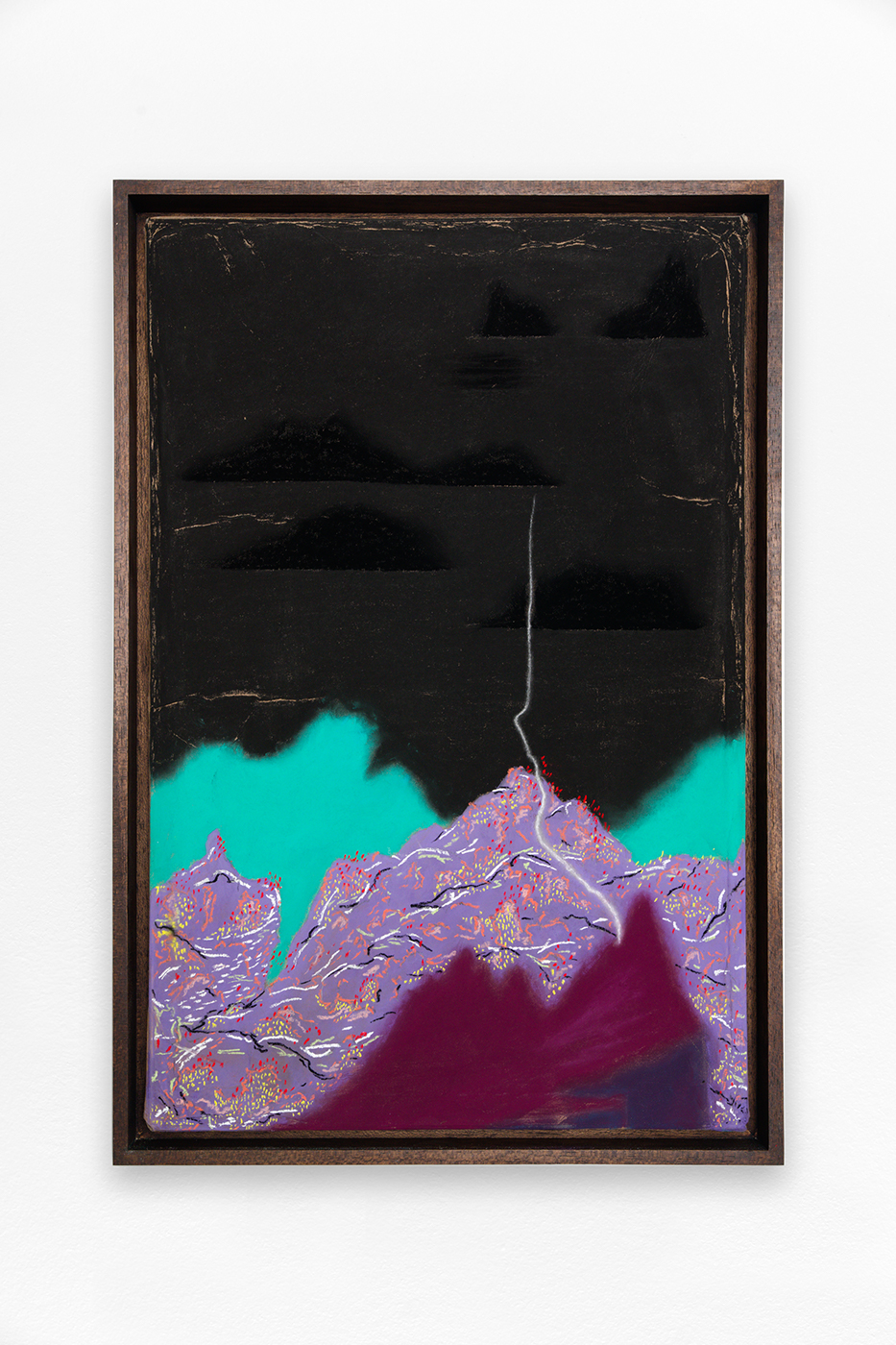
While colonial expeditions made of exotic landscapes a popular trope in European art, Disundi gives a different twist to his lush landscapes, mountains, trees, and waterfronts. In the shadows of his nighttime sceneries, we distinguish sculptural objects composed of longilinear limb-like sticks that reinvent the form of hanging structures used to dry fish. From a surface of makayabu cardboard — which carries the memories of a history of subjugation — Beau Disundi makes space for new imaginaries to appear. With their flat perspective and vibrant colors, his paintings convey a softness reminiscent of Japanese Sansui (landscape) painting; and they draw us into the type of speculative configurations one might find in Bodys Isek Kingelez's futuristic cityscapes. Disundi transforms makayabu cardboard into a bedrock for the emergence of new ways of viewing the self in relation to the world.
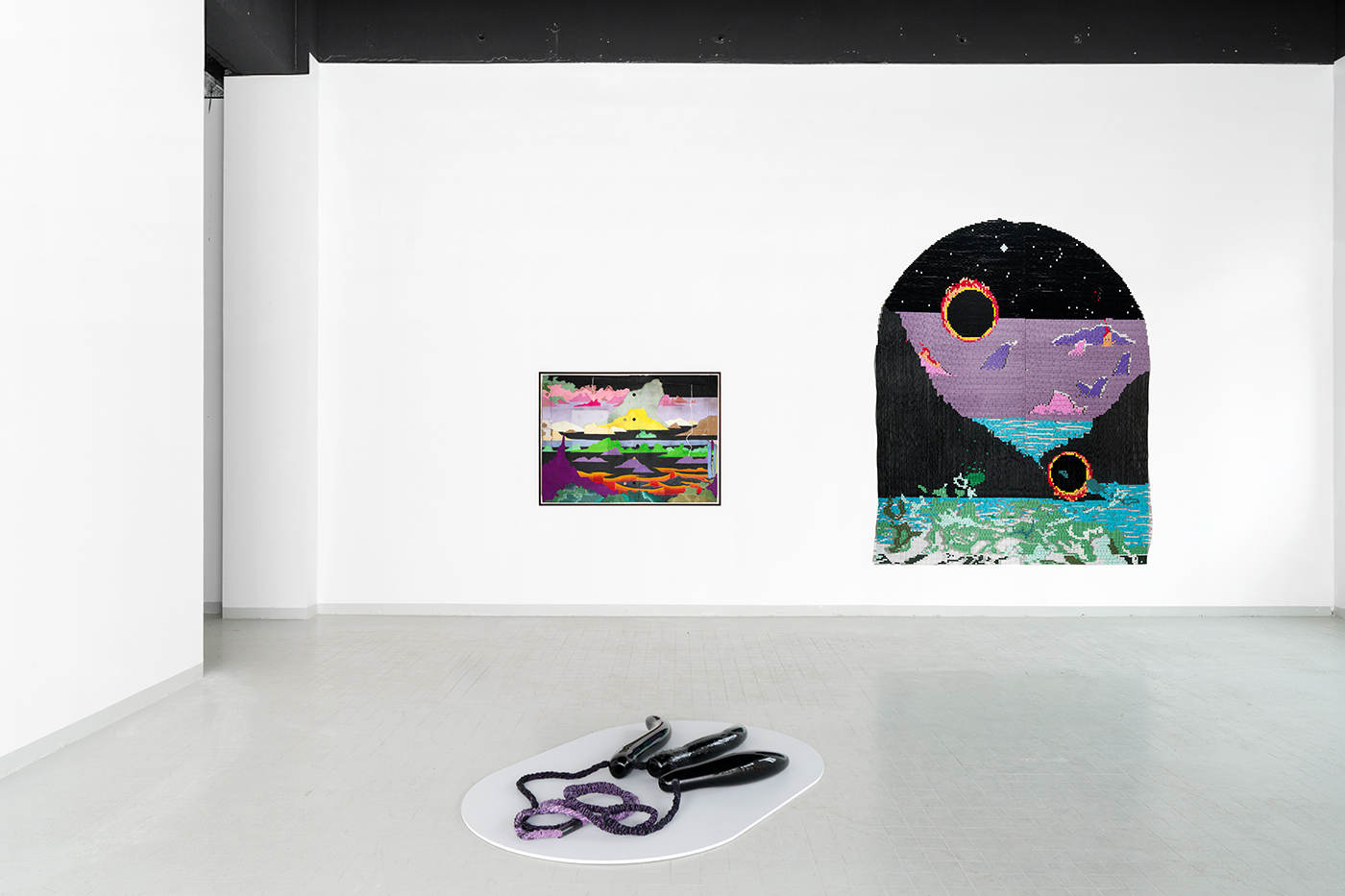
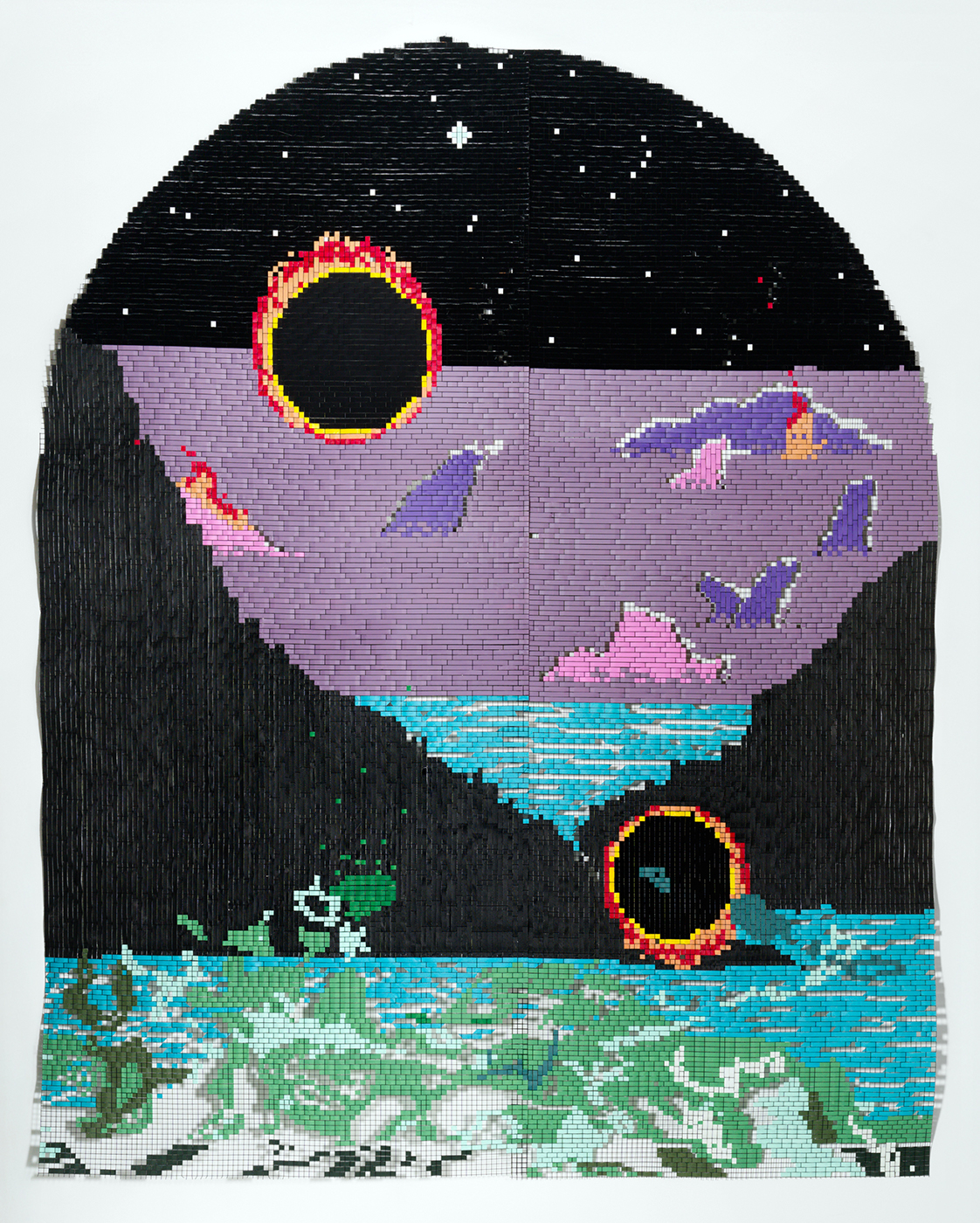
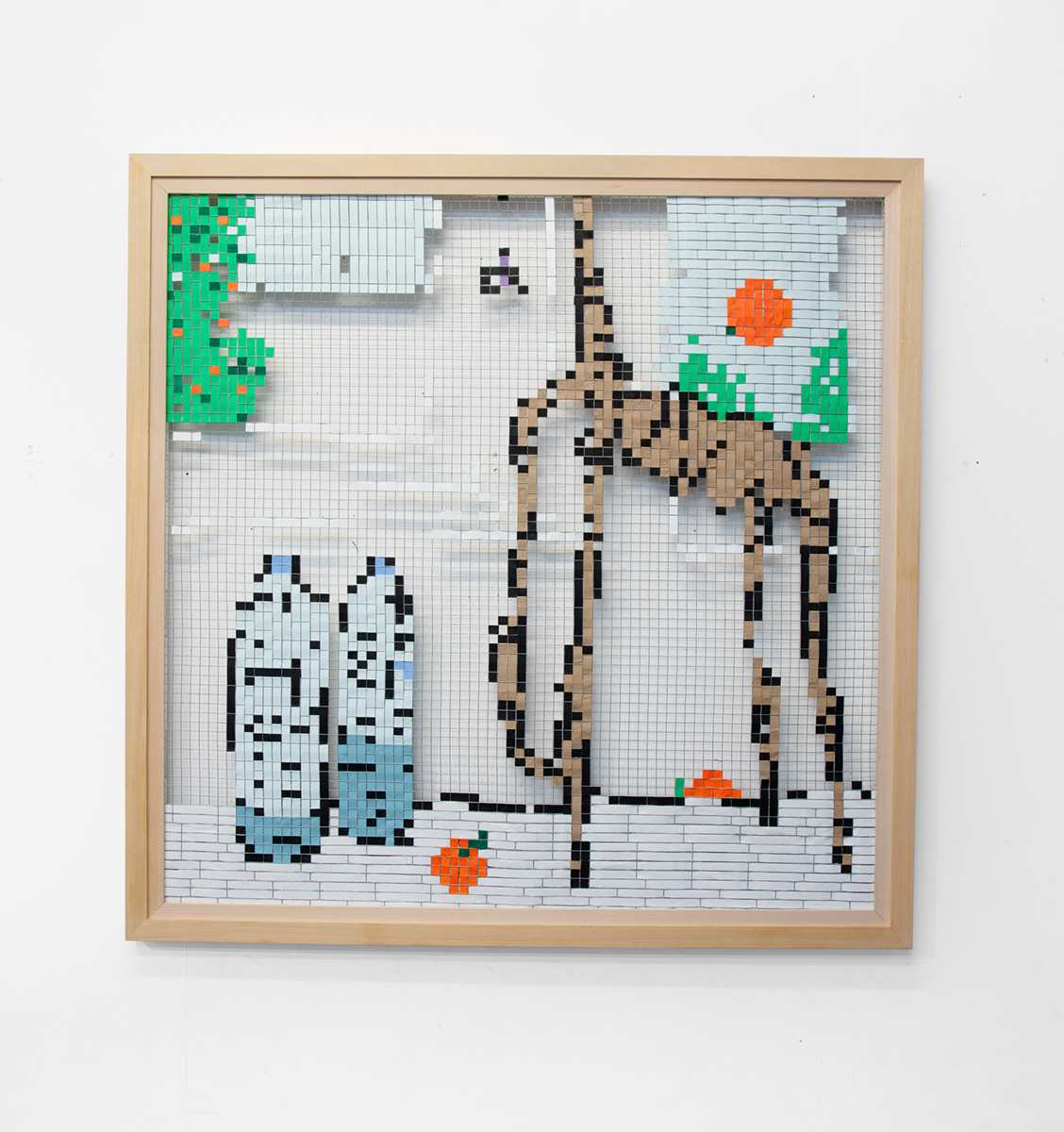
Having studied fine arts and interior architecture at university and sculpture with his father, Disundi navigates different techniques like so many ways «of getting lost and trying out other paths, other alternatives, other routes. » In his woven pieces, he borrows and reorients the modernist motif of the grid. He uses metal grids to weave images of fragmented, pixelated landscapes — as though the image were grappling with its inherited gaps or silences. Here and there, the artist places chairs in his compositions, like thrones treading on unsteady grounds — at the edge of a column in the sculpture «Ogun» (2025), and at the tip of the mountain in «Geopoetic» (2025). Whether they are made for the deity of iron and war (Ogun) or an assembly of gods presiding over Mount Olympus, the chairs appear as embodiments of power at a tipping point. With his chairs, like with his use of grids and makayabu cardboard, the artist diverts an array of materials, forms, and historical transactions that have shaped modernity as we know it.
The ensemble of new pieces featured in the gallery all materialize processes of erasure, ruptures, and forgeries that participate in the making of an image of the self. Beau Disundi's works delve into darkness to counter the omnivoracity of capitalism and enlightenment; they activate fire as a force of transformation; and ultimately, they weave together layers of troubled histories to build a sense of self beyond given — and imposed — parameters.
Sofia Dati, 2026
EXHIBITION (SELECTION)
SOLO SHOWS
2024
Anchoringsickness, Akka Project, Venice, IT
2021
Amnésie collectif, Scac marestaing, Toulouse, FR
GROUP SHOWS
2026
Embracing Grounds, Galerie In Situ - fabienne leclerc, Grand Paris, FR
"Kabarin-Javakanto: une lecture de la collection Fondation H", Fondation H, Madagascar
2025
AfricaBasel art fair, Akka Project, Basel, SW
2024
Sammy Baloji, Goldsmiths CCA, London, UK
Nexus, Artesio, Bruxelles, BE
Clap-clap-clap, 34zero Muzeum, BE
Le Sas, KBK brussels, BE
Décloisonnement, MDA, Bruxelles, BE
2022
VIII YEARS, Galerie Duret, Bruxelles, BE
2021
Lien Miroir, la galerie 3.1, Toulouse, FR
Breaking the mould: new signatures from the Democratic Republic of Congo, 198 contemporary Arts gallery, London, UK
Entre chien et loup, Tourist office, Nasbinals, FR
2020
Art Tempo, French Institute, Kinshasa, RDC
2019
Biennale de Sculpteur de Ouagadougou, French Institute, Ouagadougou, BF
Art Tempo, KinArtStudio, Kinshasa, RDC
2018
Permanent exhibition, Bilembo, Kinshasa, RDC
RESIDENCIES
2024
AKKA Project, Venise, IT
2023
Résidence de recherches, Royal Museum for Central Africa (RMCA, now: AfricaMuseum), Tervuren, BE
2021
Scac Marestaing, Toulouse, FR
Nasinals, Lozère, FR
2019
Biennale de sculpture d'Ouagadougou, Ouagadougou, BF
Art Tembo, Kinshasa, RDC
AWARDS
2019
Second Prix de la Biennale de Sculpture d'Ouagadougou, Ouagadougou, BF
Prix du public d'Art Tembo, Kinshasa, RDC
EDUCATION
2022-2024
Master of Arts, ENSAV LaCambre, Brussels, BE
2020-2022
Bachelor of Arts (with honors), Ecole Supérieur d?Art de Dunkerque, Dunkerque, FR
2014-2016
Master's degree in interior architecture, Académie des Beaux-Art-de Kinshasa, Kinshasa, DRC
2011-2014
Bachelor's degree in interior architecture, Académie des Beaux-Arts de Kinshasa, Kinshasa, DRC